
 There’s a huge backlash against the First Lady and her school lunch program. Here are a few articles.
One of the problems is that kids aren’t eating the fruit and vegetables on the school lunch tray. Why? Because they don’t eat them at home and haven’t developed a taste for them.
I love hacks and formulas. That’s how I have figured out much of this parenting/food/house stuff. My dinner-time formula is protein, carb, vegetable, salad. Every night. The salad is optional.
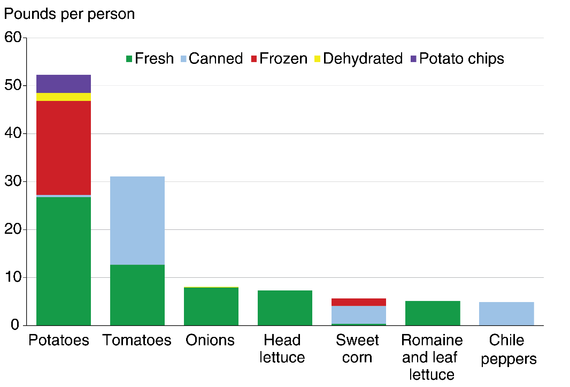
What fits into the vegetable slot? Lettuce isn’t substantial enough to be a vegetable course at dinner. A potato is not a vegetable; it’s a carb. So every single night, every member of this family eats a vegetable — broccoli, squash, cauliflower, peas, carrots, kale, spinach, zucchini, eggplant. If I make a vegetable that Ian won’t eat (last night the main vegetable was kale sautéed with garlic and hot peppers), then I serve him some frozen peas or raw carrot.

 Apt. 11d
That’s a fairly traditional “three lump” dinner (with the salad as a little fillip). We do exactly the same, though usually without the salad. Now that we are empty nesters, we don’t have to worry about picky children.
LikeLike
I actually disagree based on my experience. My kid would never eat fruit at home but says he eats a pear or something every day at school. There’s something about 1. being around other kids eating and 2. being hungry enough to eat what’s in front of him.
LikeLike
Yeah. C was on an overnight fieldtrip where they all had spaghetti and some other non-favorites. My husband was a chaperone and he noticed that C ate what everybody else was eating. We talked about it afterwards and C said she didn’t want to give offense.
I think that schools should occasionally try introducing certain foods as special treats (with the goal of encouraging home experimentation). When I was in kindergarten, we got ants on a log (celery, peanut butter and raisins) as a snack. A few grades later, a teacher brought in kiwis for us to try. And I think I’ve heard of pomegranates being given the same treatment. Blood oranges might make a good Halloween party treat. For a patriotic holiday or a unit on the American revolution, you could give kids a slice of bread spread with cream cheese and then have them arrange blueberries and bits of strawberry in the American flag pattern of their choice. Fruits that are either exotic or have some sort of play value (veggies with dips) are good options.
It doesn’t have to be all work and no play.
LikeLike
Potatoes are closer to ‘vegetable’ if you don’t peel them. My kids don’t know that mashed potatoes sometimes don’t have little flecks of peel in them. Much higher in vitamin C
LikeLike
School lunches have broadened my children’s tastes (in our case, it was for simply cooked meats). We are not always perfect about vegetables (when they’re not already part of a dish — as in stir fries, but my kids will eat vegetables on the sides and are a fan of a variety of raw vegetables.
They really do not appreciate a facet of our school lunches — the hidden vegetables, ground up into sauce or mushed into other dishes. That seems to be one of the trends of trying to promote healthy eating, to hide the vegetables, so that the kids can’t just leave them.
I’m not all that sympathetic to the short term complaints about kids not eating the vegetables — I think we’d need to try the new meal plans for years, before we can accept that kids just won’t eat them, because, as you say, a lot of food taste is experience and expectation. Not for every single kid, but for many.
LikeLike
Vegetables taste good based on the amount of carbs they have in them. That’s why potatoes taste good and moderately carby vegetables like onions, carrots, beets, and peas taste moderately good. The only exception is avocados, which taste good because they figured out how to make a high-fat vegetable.
LikeLike
I love lettuce and celery and only mildly like carrots and dislike beats and peas. Onions are their own category, and I do like them.
(I also love Google. For 100g serving: lettuce, 2.9g; celery, 3g; carrots, 10g; beets; 10g; peas: 14g; apple: 14g).
I have never understood how the avocado managed to become a high fat vegetable. Apparently I’m not the only one who has wondered if an avocado is a drupe, like a coconut.
LikeLike
PS: Potato, 17g
LikeLike
Our Baby T innocently appreciated veggies like steamed broccoli and so forth up until several months ago. A switch seemed to flip at that point and then she would just sweep the broccoli off her tray with a “No!” The starchy vegetables seem to get a much fairer hearing.
I suspect that there’s a lot of survival value in this. If a human child were to be happy filling up on low-calorie non-starchy veggies, they could literally starve with a full stomach. Starchy veggies are more economical in terms of calories per bite.
The switch-flipping also happened with yogurt. I had been giving her the Brown Cow cream top plain yogurt for quite a few months when suddenly the switch flipped, the lights went on, and Baby T suddenly realized that there’s more to life than plain yogurt. We’ve since moved on to YoBaby.
LikeLike
I put potatoes in the carb column, along with pasta, rice, and couscous. I alternative carbs thoughout the week. Sweet potatoes fit into both the carb and vegetable column. So, sometimes I’ll make steak and baked sweet potatoes for dinner.
More on the potato — carb v. veg — controversy. http://www.boston.com/lifestyle/food/articles/2011/05/02/do_root_vegetables_like_sweet_potatoes_count_as_vegetables_or_starches_and_is_it_true_that_all_the_nutrition_is_in_the_skins/
LikeLike
School is a place for learning and I think that over the course of many years, most kids can learn to like fruits and vegetables. Just because healthy eating isn’t taught in homes doesn’t mean schools should give up teaching it by example.
My high school health teacher would buy fresh fruit every morning and sell it to students who could eat it in class. I didn’t like oranges before that class, but having someone in the room peeling an orange was enough to make me buy a few. I had lunch right after my health class–you could buy Pizza Hut, Taco Bell, soda, candy bars, greasy breadsticks, cheesy fries, and old bruised apples and bananas (they *never* looked fresh). It was sheer hypocrisy for schools to tell kids they should eat healthy but not provide healthy options in the cafeteria.
LikeLike
Yes. It’s fascinating reading about how aggressively the French attend, in the schools, to developing kids’ palates. I know the autocracy of that system wouldn’t work here in the US, but having food in the schools be part of the learning is a good thing. And, the experiment hasn’t failed after 6 months of trying it in the high school.
I might vaguely worry about the children receiving free lunch who might end up hungry, because, say, they won’t eat the fresh fruit. But, if they are hungry, won’t most everyone (aside from serious food sensitivities) eat?
LikeLike
Reading about picky eaters reminds me of an episode when I was very young. I went through a phase where the only thing I would eat was hot dogs, so my mother obligingly made me hot dogs for dinner every night. (She ate her dinner separately with my father after the kids were in bed.) This went along for weeks, until one evening when my grandmother was visiting, at which time I looked up and said plaintively, “Do we have to have hot dogs for dinner every night?” My mother could never live this episode down with my grandmother.
LikeLike
Y81 – the book you want is ‘Bread and Jam for Frances’ by Russell Hoban. Trust me on this.
LikeLike