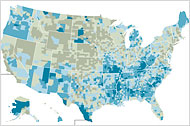
 The New York Times has a great article on the increased numbers of people on food stamps. You must check out their interactive map to see the numbers of recipients in your county. Some stats from the article:
- 1 in 8 Americans and 1 in 4 children are on Food Stamps
- 36 million Americans receive benefits
- In some counties, half of all children receive benefits.
- Only 2/3rd of those who are eligible have applied for the benefits. 15 to 16 million more could be getting services.
- Now nearly 12 percent of Americans receive aid — 28 percent of blacks,
15 percent of Latinos and 8 percent of whites. Benefits average about
$130 a month for each person in the household, but vary with shelter
and child care costs. - Almost 90 percent of beneficiaries nationwide live below the poverty line (about $22,000 a year for a family of four).
The article focused on the rising numbers on Food Stamps due to the recession. Blue collar workers, especially those tied to the auto industry, have been forced to apply for services.
The article also talked about the politics of Food Stamps. I think they overstated the left-right divide on this issue. The right has been more accepting about food vouchers than other welfare services, because the dollar amount isn't huge, and nobody really wants poor people to starve in the streets. There have been debates about how to prevent people from gaming the system and finding a way to trade in the food vouchers for crack, but this program hasn't been as controversial as other welfare programs.
My dad runs a food pantry, and he's overwhelmed by the need for food out there. He works nearly full time stuffing brown bags with ketchup and peanut butter. Our local food pantry is always begging for rice and beans. There has to be a better way.
I would like to see more food classes offered on squeezing the most out of your food voucher and cooking nutritious meals. There needs to be more places that offer prepared meals to the poor.
And, of course, we need to get to the root of the problem. We need massive job retraining for those in the hardest hit areas.

 Apt. 11d