American cities are rapidly changing. A few, like New York City, are playgrounds for Successful Creatives and Oxford Shirt Professionals. But even more are home to meth labs and tattoo parlors and dwindling resources. The cops and teachers collect their pensions out in the suburbs. Money only flows out of these cities.
Some cities will simply not exist in another decade or two. Wiped clean off the map with bulldozers. Urban farmers will grow toxic tomatoes on questionable soil.
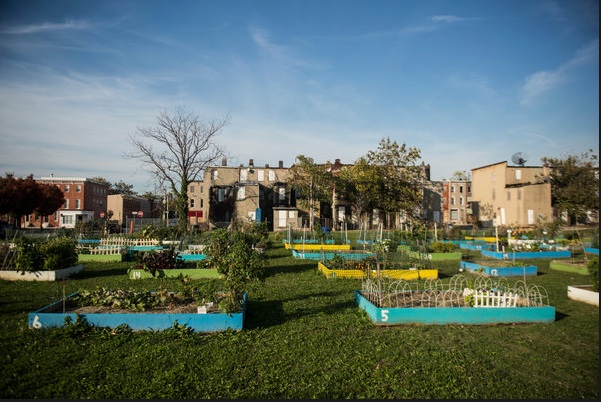

Other cities sell off their homes at Costco prices to urban pioneers.
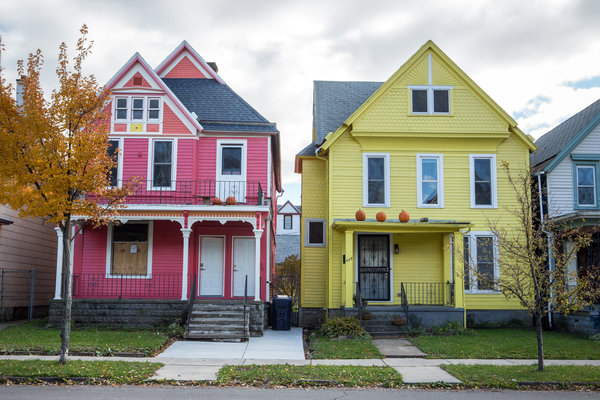
But most cities are simply rotting.
We drove around a lot this summer. We spent a few days in Cleveland visiting Steve’s extended family. Cleveland is trying to survive with the urban pioneers and toxic tomato growers, but it’s a losing battle. There is simply too much to demo and not enough urban pioneers.
Smaller cities in America are even more sad. On the way home, we pulled off the highway into a former city in Pennsylvania for lunch. I suppose it was once considered a city, but it was too empty to really call it a city anymore. We decided to skip the fast food at the mall off the highway and went to the downtown area for something local. That was a mistake. There were no coffee shops or pubs there. The dirty store fronts were empty. We walked down the street looking for life and were overwhelmed by the smell of mold. The buildings were rotting around us.
A few weeks later, we drove to Maine for a vacation at Acadia National Park. Because we hadn’t been to Maine before, I set up an overly ambitious vacation with lots of stops along the way. I like to explore. One night in Portsmouth, NH, another night in Portland, and several day trip to smaller cities in Maine. The coastline was brimming with activity and great restaurants. Once we ventured inland, Maine was a different place – depressing, vacant, and alarmingly old and white. The entire state has the population that equals one borough of Manhattan.
After our three days in the woods at Acadia, we took a day trip to Bangor, Maine. I was thinking about writing an article about author stalking. Stephen King’s house in Bangor is a huge tourist attraction. We easily found his address on google and I made Jonah stand in front of the house for a photo. It was a rainy day; he wasn’t that happy about getting out of the car for one of mom’s weird projects.
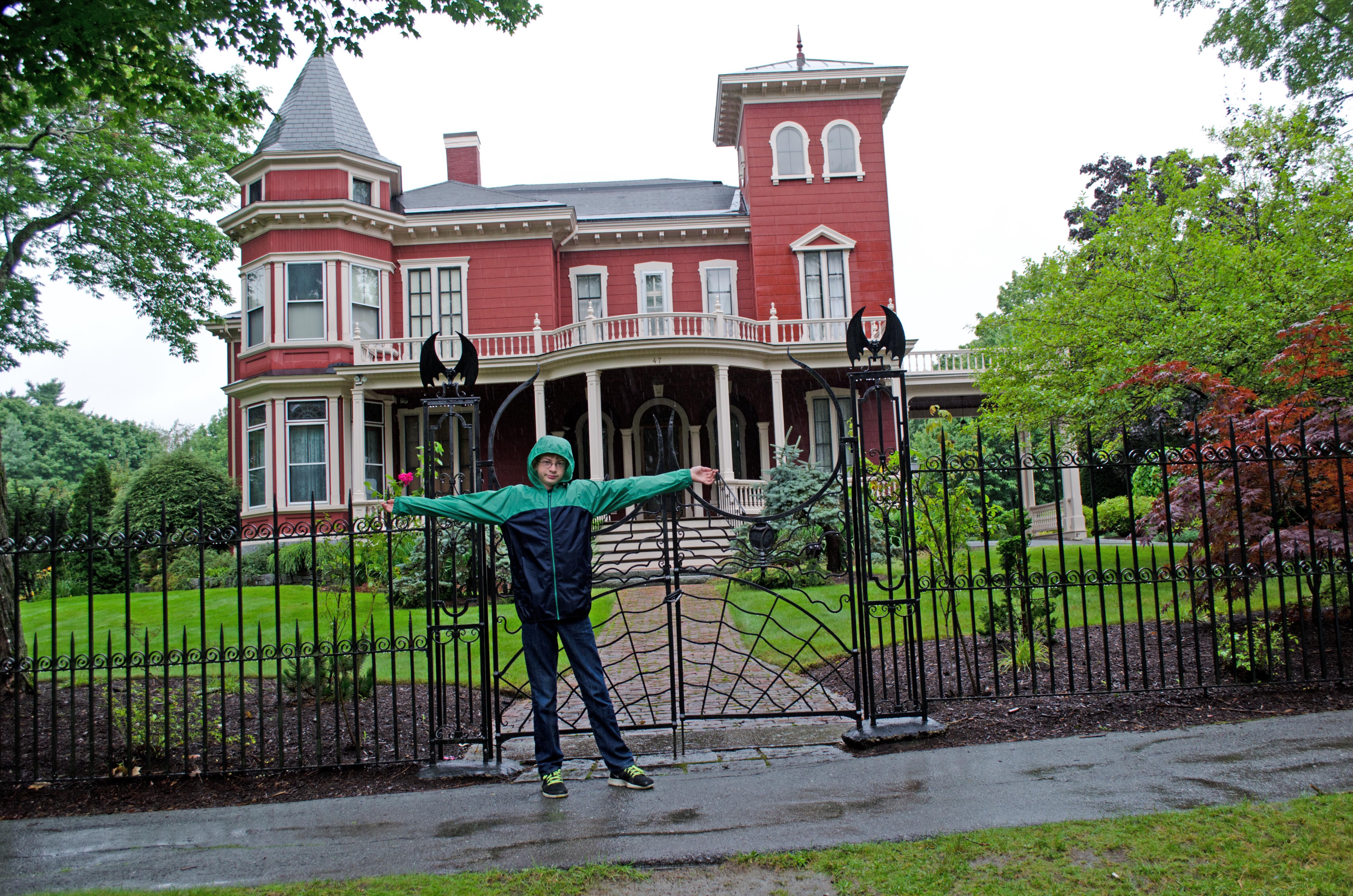
Steven King’s house is a loving restoration of a home from Bangor’s glory days. It was probably built by a wealthy industrialist 120 years ago. A few other houses on his block were also well maintained, but just 100 yards away, things weren’t so pretty. The large homes had been divided up into rental apartments. Other apartment buildings sagged on their foundations. We found a microbrew pub that served students and professors at the local college, but there wasn’t much else to see there.
We hit a couple of other smaller cities on our long drive home and saw more of the same. One bar had enlarged old black and white photographs of the paper mills that had sustained the city for many years. Smiling industrialists posed next to shiny cars. Bands marched down Main Street. One sign under the photographs said “[Place That I Can’t Remember] In the Golden Years.” When I went to the bathroom, water bubbled up from toilet.
In Empire Falls
I’m not sure there is anyway to save these cities, especially the smaller ones, that have seen the loss of factories and industry. They can’t support the population on government benefits and colleges alone. Maybe we have accept these cities will disappear and not be so sentimental about the past.

 Apt. 11d