My comment would trend dangerously close to the them mentality, but, honestly, I’ve never heard a liberal say this. Mind you, some of them might act as though they believed it, but no one would admit to not caring about the rest of humanity.
If we knew for absolutely certain that an asteroid was going to hit the earth in 150 years (I think we’ll all be dead then and, we could, know that an asteroid was going to hit the earth, I think, with our current knowledge of movement of objects in space — one could be on a trajectory with a collision course, with a high degree of predictability), would you really not care? Or, is this mere flippancy? Or, alternatively, a statement that we have inevitability and unpredictability and even longer timing? Those things could be discussed, though, I think, not the statement that one doesn’t care what happens after one is dead (something I’m guessing, is, not even in a minor sense, true).
Inevitability makes a difference. If something is inevitable, it’s not worth worrying about.
Also, bear in mind that a lot of traditional conservatives (like y81) put negative value on emotional performances. The stiff upper lip is still a thing.
We also don’t believe that having “correct” emotions ought to earn you a cookie. This is a major cultural difference between traditional conservatives and traditional liberals, although you do encounter hybrid examples like Glenn Beck.
Now, I’m not sure about that. (I went to some of the lectures where Scheffler presented that work, and came away very unsure what to think.) But, people ought not feel confident, at least. And, in this case, I think that it’s fairly obvious that the response of y81 and AmyP and some others is what Tyler Cowen would call “mood affiliation.”
I think we do have to get better at communicating — cliff mass had a enlightening summary of communication on the issue: http://cliffmass.blogspot.com/2014/03/moses-versus-joseph-biblical-lesson-in.html. I started thinking about how we communicate science when I started talking about vaccines, and I think that as our knowledge of the world becomes more complex and more relevant to everyday decision making it becomes more and more important to communicate the information well.
But, if someone really believed that they don’t care what happens when they are dead, we probably have a limited range of public policy issues to talk about.
“Inevitability makes a difference. If something is inevitable, it’s not worth worrying about.”
Of course that’s not true, either. Because, there are always choices and responses to be made. And, worry, remains, if not to prevent the inevitable, but to respond.
My 6th grader just left for an overnight field trip, insisting on taking a red Elmo sleeping bag instead of the lovely and no doubt very expensive Mountain Hardware mummy bag I wanted her to take. I warned her that this choice may haunt her for the next six years of school, but she was adamant and she took the Elmo bag, insisting it’s more comfortable.
Would it do anybody any good for me to be fretting nonstop about this, now that the damage (whatever it’s going to be) is now inevitable?
If the consequences were dire, you wouldn’t’ be accepting the fate, would you? You’d be in your car driving to save her (say, if any epipen had been forgotten). Inherent in the Elmo issue is that consequences won’t be dire (actually I’m not sure what the consequence of an Elmo bag are?)
PS: When I read Laura’s title, I first thought she was going to talk about the sociological dimensions of the Venice/Manhattan population (that Manhattan, too will be emptied of children and become a tourist attraction).
I care about my children and theoretical grandchildren. So I’m a bit loose from y81 there. I think every bit of cheap oil and gas will be burned, because the Chinese and the Indians and the Russians will laugh at us if we ask them pretty please not to. Research on nuclear and solar and tidal may be able to move the mark on what is ‘cheap’, and so is well worth doing, because the BRICs won’t go after fossil fuel if it’s more expensive than the alternatives.
As I understand the article, changes in energy consumption won’t make any difference. The melting of the ice sheets is “inevitable,” though it may take as long as a millennium. That is my point: there’s no point in thinking about inevitable things a long way in the future.
I think I’m actually more worried about fracking than I am about the polar ice cap. Seems more likely to have dire consequences in our lifetime — like earthquakes, poisoning the water, etc.
Let’s all see how people feel when the food supply collapses. I highly doubt we’ll all be dead before that happens, given current trends in climate change.
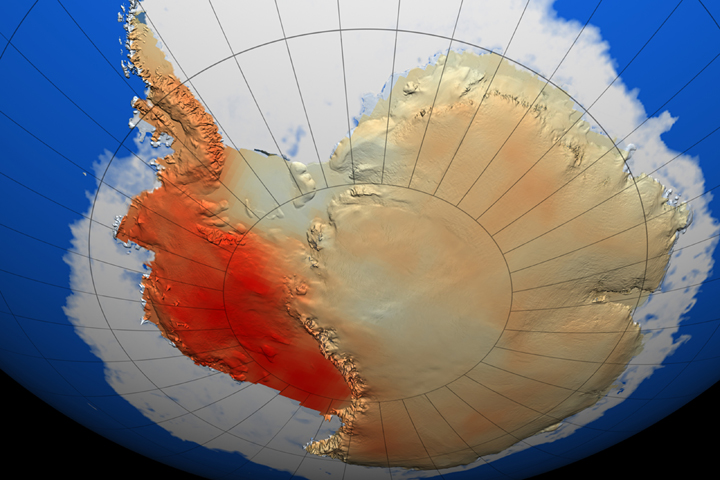 This is the “holy shit” image of the week.

 Apt. 11d
I’m 1,000 feet above sea level and 200 above the river. I should be fine.
LikeLike
If something is (i) inevitable and (ii) not going to happen until after I am dead, then I don’t worry about it very much. Indeed, not at all.
LikeLike
My comment would trend dangerously close to the them mentality, but, honestly, I’ve never heard a liberal say this. Mind you, some of them might act as though they believed it, but no one would admit to not caring about the rest of humanity.
If we knew for absolutely certain that an asteroid was going to hit the earth in 150 years (I think we’ll all be dead then and, we could, know that an asteroid was going to hit the earth, I think, with our current knowledge of movement of objects in space — one could be on a trajectory with a collision course, with a high degree of predictability), would you really not care? Or, is this mere flippancy? Or, alternatively, a statement that we have inevitability and unpredictability and even longer timing? Those things could be discussed, though, I think, not the statement that one doesn’t care what happens after one is dead (something I’m guessing, is, not even in a minor sense, true).
LikeLike
Inevitability makes a difference. If something is inevitable, it’s not worth worrying about.
Also, bear in mind that a lot of traditional conservatives (like y81) put negative value on emotional performances. The stiff upper lip is still a thing.
We also don’t believe that having “correct” emotions ought to earn you a cookie. This is a major cultural difference between traditional conservatives and traditional liberals, although you do encounter hybrid examples like Glenn Beck.
LikeLike
Inevitability makes a difference. If something is inevitable, it’s not worth worrying about.
There’s some reason to think that’s not true.
Now, I’m not sure about that. (I went to some of the lectures where Scheffler presented that work, and came away very unsure what to think.) But, people ought not feel confident, at least. And, in this case, I think that it’s fairly obvious that the response of y81 and AmyP and some others is what Tyler Cowen would call “mood affiliation.”
LikeLike
I think we do have to get better at communicating — cliff mass had a enlightening summary of communication on the issue: http://cliffmass.blogspot.com/2014/03/moses-versus-joseph-biblical-lesson-in.html. I started thinking about how we communicate science when I started talking about vaccines, and I think that as our knowledge of the world becomes more complex and more relevant to everyday decision making it becomes more and more important to communicate the information well.
http://cliffmass.blogspot.com/2014/03/moses-versus-joseph-biblical-lesson-in.html
But, if someone really believed that they don’t care what happens when they are dead, we probably have a limited range of public policy issues to talk about.
LikeLike
“Inevitability makes a difference. If something is inevitable, it’s not worth worrying about.”
Of course that’s not true, either. Because, there are always choices and responses to be made. And, worry, remains, if not to prevent the inevitable, but to respond.
LikeLike
Example:
My 6th grader just left for an overnight field trip, insisting on taking a red Elmo sleeping bag instead of the lovely and no doubt very expensive Mountain Hardware mummy bag I wanted her to take. I warned her that this choice may haunt her for the next six years of school, but she was adamant and she took the Elmo bag, insisting it’s more comfortable.
Would it do anybody any good for me to be fretting nonstop about this, now that the damage (whatever it’s going to be) is now inevitable?
LikeLike
If the consequences were dire, you wouldn’t’ be accepting the fate, would you? You’d be in your car driving to save her (say, if any epipen had been forgotten). Inherent in the Elmo issue is that consequences won’t be dire (actually I’m not sure what the consequence of an Elmo bag are?)
LikeLike
“Inherent in the Elmo issue is that consequences won’t be dire (actually I’m not sure what the consequence of an Elmo bag are?)”
Social death!
(I was looking for the Mean Girls clip where everybody says, “Mathletes is social death!” but I couldn’t find it.)
LikeLike
PS: When I read Laura’s title, I first thought she was going to talk about the sociological dimensions of the Venice/Manhattan population (that Manhattan, too will be emptied of children and become a tourist attraction).
LikeLike
I care about my children and theoretical grandchildren. So I’m a bit loose from y81 there. I think every bit of cheap oil and gas will be burned, because the Chinese and the Indians and the Russians will laugh at us if we ask them pretty please not to. Research on nuclear and solar and tidal may be able to move the mark on what is ‘cheap’, and so is well worth doing, because the BRICs won’t go after fossil fuel if it’s more expensive than the alternatives.
LikeLike
As I understand the article, changes in energy consumption won’t make any difference. The melting of the ice sheets is “inevitable,” though it may take as long as a millennium. That is my point: there’s no point in thinking about inevitable things a long way in the future.
LikeLike
I think I’m actually more worried about fracking than I am about the polar ice cap. Seems more likely to have dire consequences in our lifetime — like earthquakes, poisoning the water, etc.
LikeLike
Let’s all see how people feel when the food supply collapses. I highly doubt we’ll all be dead before that happens, given current trends in climate change.
LikeLike